
Is Hypothyroidism an Autoimmune Disease? Visit Questions
Is hypothyroidism an autoimmune disease? Learn how Hashimoto’s differs from other causes and which questions to bring to a thyroid visit.
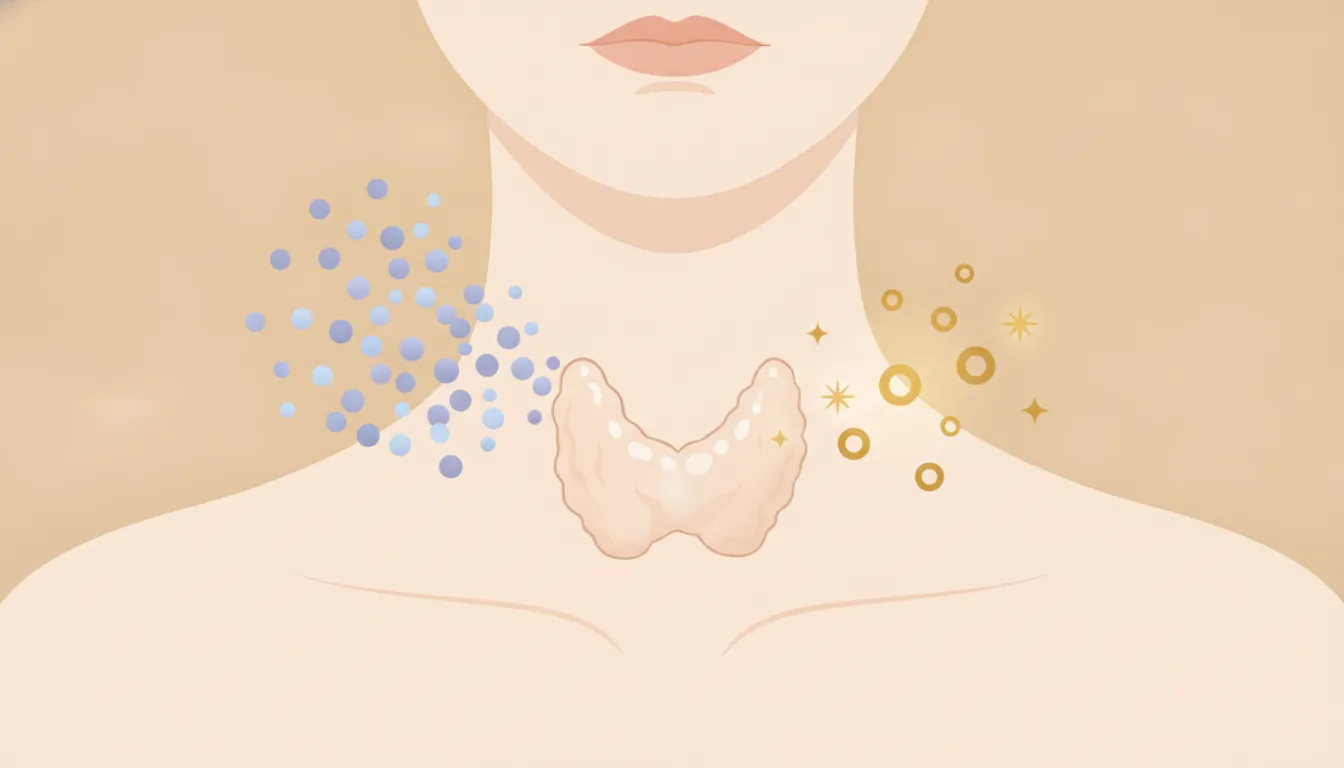
If you are asking, “is hypothyroidism an autoimmune disease?” the short answer is: hypothyroidism itself describes low thyroid hormone, while Hashimoto’s disease is an autoimmune condition that can cause hypothyroidism. Hashimoto’s is an important possibility, but it is not the only possible reason a person may have an underactive thyroid. A careful visit looks at the cause, the thyroid findings, your history, and what you are experiencing instead of treating one label or one symptom as the whole answer.
Call (785) 272-3700 to ask about a thyroid health visit with Walsh Health Solutions. A phone conversation can help you understand the available next step for a Topeka office or Zoom visit without assuming a diagnosis in advance.
This article is general education, not a diagnosis or a personal treatment plan. Do not stop, start, or change thyroid medicine based on an article. If you already have a clinician who prescribes your medicine, keep that clinician involved in decisions about dosing and monitoring.
Is hypothyroidism an autoimmune disease?
Not always. Hypothyroidism is a description of thyroid function: the body does not have enough thyroid hormone available for its needs. It does not, by itself, identify why the thyroid is underactive. The cause may be autoimmune, a prior treatment or procedure, a medication effect, inflammation, or another health issue that needs its own evaluation.
Hashimoto’s disease, also called Hashimoto’s thyroiditis or autoimmune thyroiditis, is one autoimmune cause of hypothyroidism. In an autoimmune disease, the immune system mistakenly reacts to the body’s own tissue. With Hashimoto’s, that immune response involves the thyroid. Over time, inflammation and damage may reduce the thyroid’s ability to make hormone, although the pattern and timing are not identical for everyone.
The National Institute of Diabetes and Digestive and Kidney Diseases explains Hashimoto’s disease as an autoimmune disorder that can cause hypothyroidism. That wording matters. It is more accurate to say that Hashimoto’s can cause hypothyroidism than to say that every case of hypothyroidism is autoimmune.
What else can cause an underactive thyroid?
A person may develop hypothyroidism after thyroid surgery or radioactive iodine treatment. Neck radiation, some medicines, inflammation of the thyroid, and problems involving the pituitary gland can also be part of the story. Pregnancy-related thyroid changes may affect thyroid function as well. These possibilities do not mean that one of them is causing your symptoms. They show why a visit begins with questions about your health history rather than a guess based only on how you feel.
Some people have a clear history of thyroid treatment. Others remember only that a test was called “normal,” that a medicine was started years ago, or that symptoms gradually changed after pregnancy or another major health event. Bring what you know and be clear about what you do not know. Uncertainty is useful information for a clinician; it is not a reason to fill in the gaps with an assumption.
Symptoms can add context, but they cannot identify an autoimmune cause on their own. Fatigue, weight changes, feeling cold, constipation, dry skin, hair changes, and difficulty concentrating can occur with hypothyroidism, but they can also occur with many other concerns. A symptom list can help a clinician ask better questions. It cannot prove that Hashimoto’s, or any other thyroid condition, is the cause.
How can a thyroid visit clarify the question?
A useful visit separates several questions that are easy to combine. First, is thyroid function currently low, high, or within the laboratory’s stated range? Second, if thyroid function is abnormal or a thyroid condition is suspected, what could explain it? Third, do the symptoms fit the thyroid findings, or should other possibilities also be considered? Fourth, what needs to be monitored next?
Walsh Health Solutions describes its process as Access, Test, Personalize: understand the health history, use testing that fits the questions raised by that history, and create a personal plan from the information available. That description is not a promise that testing will find one cause or that every symptom will be explained. It is a reminder that a test has more meaning when the reason for ordering it is clear.
For a broader explanation of how the practice places a functional-medicine conversation beside regular thyroid care, see Functional Medicine for Hypothyroidism. This article stays narrower: it focuses on the autoimmune question and the questions you can bring to a thyroid visit.
What information is useful to bring?
Bring the thyroid test reports and dates you already have, along with a current list of prescription medicines, over-the-counter products, and supplements. If a report includes the laboratory’s reference range and units, keep that information with the result. A number without its test name, date, or reference range can be difficult to put in context.
Also write a short timeline of what you noticed and when. You might note when fatigue began, whether hair or skin changes come and go, when weight changed, or whether symptoms appeared after a medicine change, pregnancy, illness, or procedure. Separate observations from theories. “I feel cold most afternoons” is an observation. “My antibodies are causing every symptom” is a conclusion that requires evaluation.
The practice’s guide to preparing for a first thyroid health assessment covers practical records and symptom notes in more detail. You do not need to create a perfect medical archive before asking for help. A clear summary and the records you can access are a reasonable starting point.
Questions to ask about Hashimoto’s and hypothyroidism
You can take the following questions to a primary-care visit, endocrinology visit, or another qualified thyroid-health conversation. You may not need every question. Choose the ones that match your history and write down the answers in language you understand.
| Question to ask | Why it may help | What it does not establish by itself |
|---|---|---|
| Could Hashimoto’s be one possible cause of my hypothyroidism? | It opens a discussion about autoimmune thyroid disease alongside other causes and your health history. | Asking the question does not confirm that Hashimoto’s is present. |
| Which thyroid findings are we trying to understand? | It clarifies whether the visit is focused on thyroid hormone levels, an autoimmune possibility, symptoms, or more than one concern. | A single finding does not explain every symptom or predict what will happen next. |
| What do the tests already completed show, and what remains uncertain? | It helps you understand the difference between information you have and questions that are still open. | A result described as normal or abnormal is not a complete diagnosis without context. |
| If antibody testing is considered, what question would it answer? | It keeps testing connected to a clinical question rather than treating a panel as an answer on its own. | An antibody result does not directly measure all thyroid function or prove that every symptom is thyroid-related. |
| What other causes or conditions should be considered? | It avoids assuming that fatigue, weight change, brain fog, or another concern has only one possible cause. | Considering another possibility does not dismiss your symptoms or rule out a thyroid contribution. |
| What should I monitor, and when should we review it? | It gives you a clear follow-up question about timing, symptoms, and which information to bring back. | A general follow-up schedule cannot replace instructions from the clinician managing your care. |
How should you think about the cause and the condition?
It can help to picture two related but different parts of the conversation. The first part is thyroid function: is the thyroid making enough hormone for the body’s needs, and what do the current results show? The second part is cause: why is thyroid function changed, and is an autoimmune process one possible explanation? A person may need answers to both questions, but the answers do not always arrive at the same time.
Someone can have evidence of autoimmune thyroid disease before developing clear hypothyroidism. Someone else may have low thyroid function after a procedure or medication without Hashimoto’s being the explanation. A third person may have symptoms that resemble hypothyroidism while thyroid testing does not show that the thyroid is underactive. Those patterns are different, even though the same words such as tired, cold, foggy, or “normal labs” may appear in each story.
Family history can be worth mentioning, especially if relatives have thyroid disease or other autoimmune conditions. So can a history of neck treatment, thyroid surgery, pregnancy-related changes, or medicines that may affect thyroid function. These details are clues for a clinician to weigh, not proof of a diagnosis. Write them down if they are easy to recall, and say when you are unsure.
If the conversation becomes focused on a single number, bring it back to the larger question: what does this result add to the history, and what does it leave unanswered? That approach keeps a possible autoimmune cause in view without turning it into a conclusion before the relevant information has been reviewed.
What if thyroid antibodies are positive?
A positive antibody result may support an autoimmune thyroid question, depending on which antibody was measured, the laboratory’s range, and the rest of the clinical picture. It does not automatically explain the severity of symptoms, determine the right dose of medicine, or prove that every concern comes from the thyroid. Ask which antibody was measured, why it was ordered, and how the result changes the next step.
It is also important not to treat a negative result as a universal answer. Different tests measure different immune markers, and the meaning of a result depends on the question being asked. A clinician may consider thyroid function results, history, examination when appropriate, and the reason for testing together. If you want to read more about the role and limits of thyroid blood testing, see Hashimoto’s Blood Testing: What Your Results Mean.
What if my thyroid labs are described as normal?
Ask which tests were performed, what the results were, and whether the results are being interpreted alongside your symptoms, medicines, and history. “Normal” can mean a result falls within a laboratory reference interval. It does not mean that every possible cause of fatigue, weight gain, brain fog, hair change, or digestive concern has been evaluated.
At the same time, ongoing symptoms do not prove that the thyroid is the cause or that a medicine dose should change. They are a reason to keep asking careful questions. Your clinician may decide that another health issue, a medication effect, sleep, stress, nutrition, or several factors deserve attention too. A good conversation can hold those possibilities without making a promise about the outcome.
When should you seek prompt medical help?
A blog article is not the right place to manage a severe or sudden change. Seek prompt medical care for symptoms that feel urgent, such as chest pain, trouble breathing, fainting, severe confusion, or a rapidly worsening condition. If you are unsure how urgent a symptom is, contact an appropriate medical service rather than waiting for a scheduled thyroid conversation. Keep your usual clinician informed about significant changes and do not adjust prescribed thyroid medicine on your own.
Preparing for your next thyroid conversation
You do not have to answer “is hypothyroidism an autoimmune disease?” before you make an appointment. The purpose of the visit is to sort out what is known, what is possible, and what still needs to be checked. Bring your available records, a short symptom timeline, and two or three questions you most want answered. Ask what a result can show, what it cannot show, and how the next step fits your history.
Walsh Health Solutions offers thyroid-focused health conversations for people in the Topeka area and available Zoom visits. Learn more about the practice and contact options if you are ready to ask about a visit.
Call (785) 272-3700 to discuss your thyroid questions with Walsh Health Solutions. A call can help you understand the next available step without assuming a diagnosis in advance.
Walsh Health Solutions provides educational information for patients and prospective patients. This article does not diagnose, treat, or prevent disease and does not replace care from a qualified healthcare professional.